Lecture 2 · ECOSOC Representative Training · Approx. 15 min
Regulating Global Value Chains
CCMUN 2026 — ECOSOC Representative Training · Lecture 2 of 2
Labour Standards, Governance, and Bloc Dynamics
Learning Objectives
- Understand the labour challenges created by buyer-driven global value chains
- Analyze existing governance mechanisms including codes of conduct and social audits
- Evaluate the limitations and effectiveness of current governance tools
- Examine the tension between labour protection and development rights
- Identify the four main bloc positions within the GVC debate
The Governance Gap · Introduction
The Governance Gap
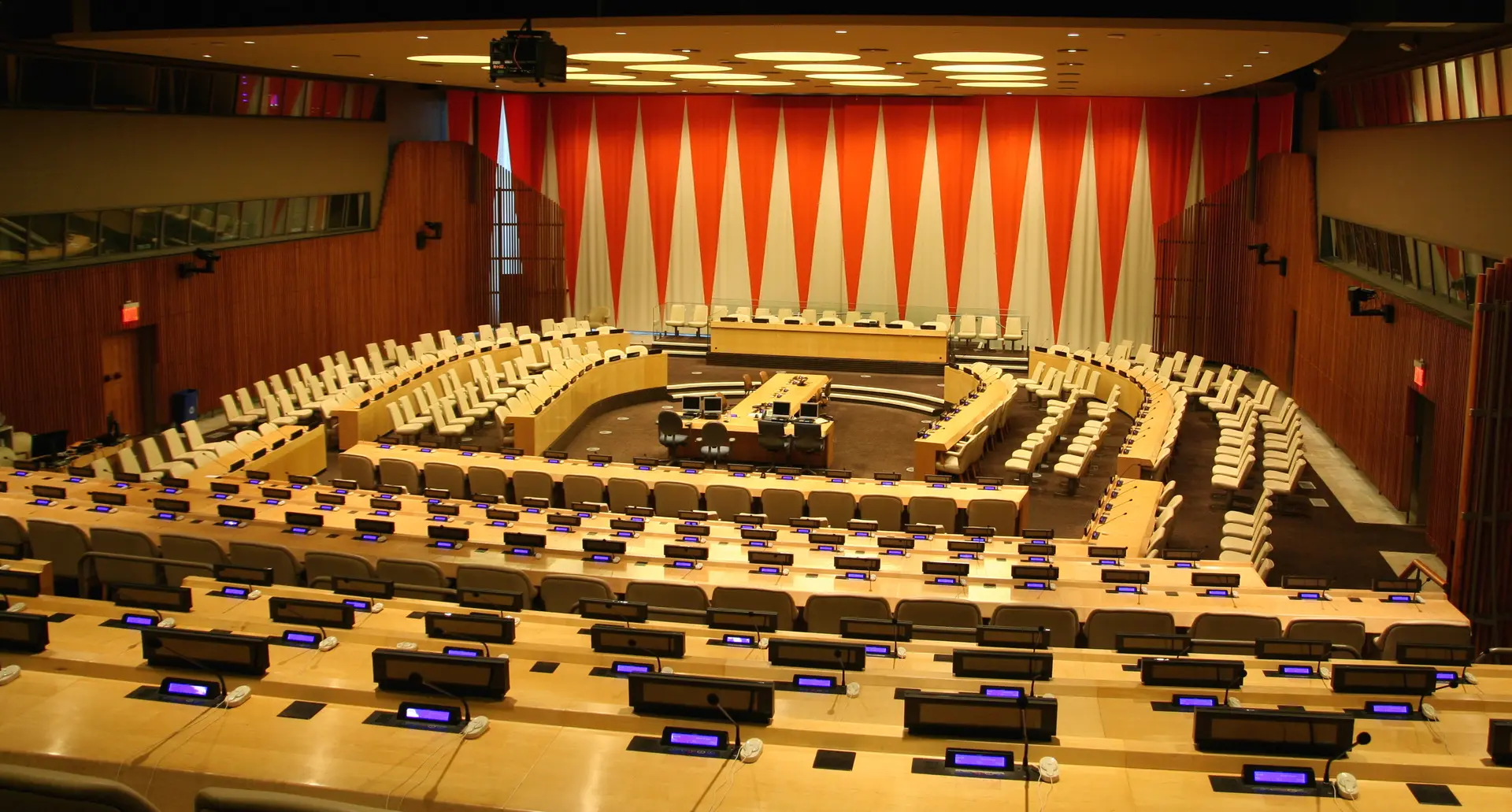
The ECOSOC chamber — where global economic governance is debated
In Lecture 1 we covered the structural problems in global value chains: the unequal distribution of value, the transfer of risk down to the lowest levels of the chain, and the power imbalance between multinational buyers and their suppliers. We know the problems exist. But knowing about a problem is not the same as solving it.
There is a deep mismatch between how global value chains operate and how labour regulation is designed. Multinational corporations operate across dozens of countries, sourcing from hundreds of suppliers scattered around the world. But labour regulation is national — each country sets its own rules, each country enforces its own standards in its own way. Workers are confined to local labour markets. They cannot follow the buyers across borders. They cannot bargain with the people who actually make the decisions about their jobs and their wages.
Buyers, meanwhile, can pick up and leave whenever they want. They can shift orders to another factory, another country, another continent, almost overnight. Suppliers, knowing this, will do whatever it takes to keep their contracts. This creates a huge power imbalance that runs through the entire system.
"Multinational corporations operate globally, but labour regulation remains national. This mismatch is the central governance challenge of our globalized economy."
— Lecture theme
Purchasing Practices · Root Causes
Labour Standards and Purchasing Practices
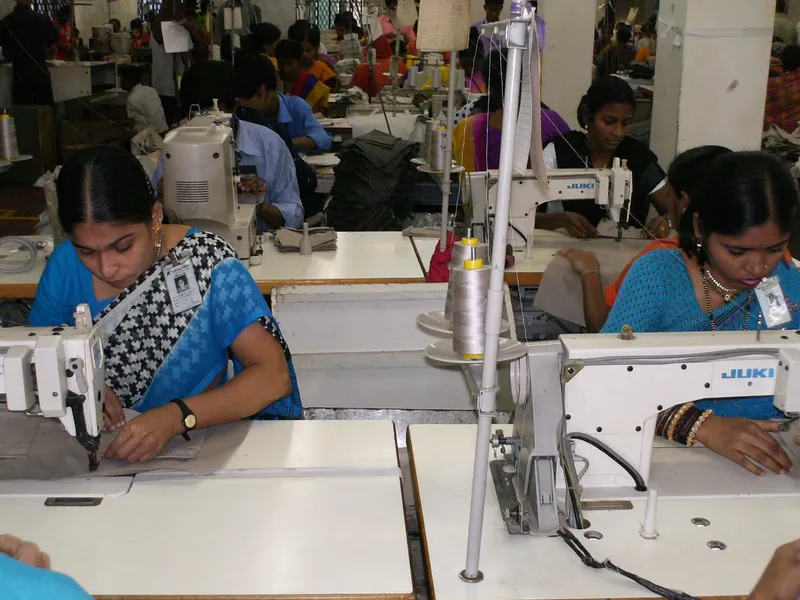
Factory workers face the direct consequences of purchasing practices
How do purchasing practices actually affect labour conditions on the ground? There are two mechanisms delegates must understand.
The first is the price squeeze. Buyers demand constantly lower prices from their suppliers — year after year, season after season. They threaten to take their business elsewhere if suppliers do not comply. Factories in Bangladesh compete directly with factories in Vietnam, Cambodia, and Ethiopia. If one will not meet the price, another will.
The second is the sourcing squeeze. Buyers demand faster delivery, smaller order quantities, and greater flexibility. They want to keep less inventory and respond quickly to changing consumer trends. They want suppliers to absorb all the uncertainty of the market.
The Squeeze Mechanism
Suppliers are caught between these two forces. Their profit margins are razor thin — often just two or three percent. They cannot afford to improve wages or safety conditions if they want to stay in business. So they cut wages, increase working hours beyond legal limits, reduce spending on safety equipment, and subcontract work to informal workshops that nobody inspects.
Research by Mark Anner (2020) on the Bangladesh garment sector documents this pattern in detail. Poor labour conditions are not simply the result of bad factories — they are the result of a system designed to transfer all risk and cost pressure to the very bottom of the chain.
Governance Tools · Current Framework
Governance Mechanisms

The ILO — the primary international body for labour standards
What tools do we currently have to improve labour conditions in global value chains? There are three main categories that delegates should know.
Corporate Codes of Conduct are voluntary rules that brands set for themselves and their suppliers. They typically address child labour, minimum wage, and the right to form unions. Most major brands have them now, though quality varies enormously.
Social Audits are third-party inspections where independent auditors visit factories and check conditions against a standard checklist. They examine fire exits, safety equipment, pay records, and overtime hours. The biggest auditing companies employ thousands of inspectors worldwide.
Multi-Stakeholder Initiatives (MSIs) bring together brands, NGOs, unions, and sometimes governments to set common standards and create joint monitoring systems.
Three Governance Mechanisms
- Corporate Codes of Conduct — Voluntary brand rules for supply chain standards
- Social Audits — Third-party factory inspections against standard checklists
- Multi-Stakeholder Initiatives (MSIs) — Joint standards involving brands, NGOs, unions, and governments
Notable examples include the Fair Labor Association, the Ethical Trading Initiative, and the Bangladesh Accord on Fire and Building Safety — created after the Rana Plaza disaster in 2013, when more than 1,100 garment workers died in a building collapse.
Critical Assessment · Structural Problems
Limitations of Current Approaches
Here is the fundamental problem with most governance tools: they are voluntary, not mandatory. Brands choose how much to engage based on their own commercial interests, and those interests do not always align with worker protection.
Social audits have well-documented problems. Inspections are brief — often only a few hours for a factory with thousands of workers. Suppliers usually get advance notice and can coach workers on what to say. The industry calls this audit fixing. There is a famous study where researchers found that audited factories were no safer than unaudited ones.
Audits mainly check first-tier suppliers — the factories that brand buyers deal with directly. But the worst exploitation happens further down the chain, in subcontracted workshops, in homeworkers' houses, in the informal economy where no regulations reach.
| Dimension |
Ideal Mechanism |
Current Reality |
| Nature |
Mandatory, legally enforceable |
Voluntary, self-regulated |
| Scope |
Entire supply chain (all tiers) |
Primarily tier-1 suppliers only |
| Inspection |
Unannounced, thorough, ongoing |
Brief, pre-announced, periodic |
| Accountability |
Legal penalties for non-compliance |
Reputational risk only |
| Root Causes |
Addresses purchasing practices |
Treats symptoms at factory level |
| Worker Voice |
Direct participation and bargaining |
Limited to audit interviews |
The truth is that current governance tools address symptoms, not root causes. They do not change the unequal power structure that drives exploitation in the first place. That is the hard reality every ECOSOC delegate needs to understand.
The Central Tension · Policy Dilemma
Development Rights vs Labour Standards
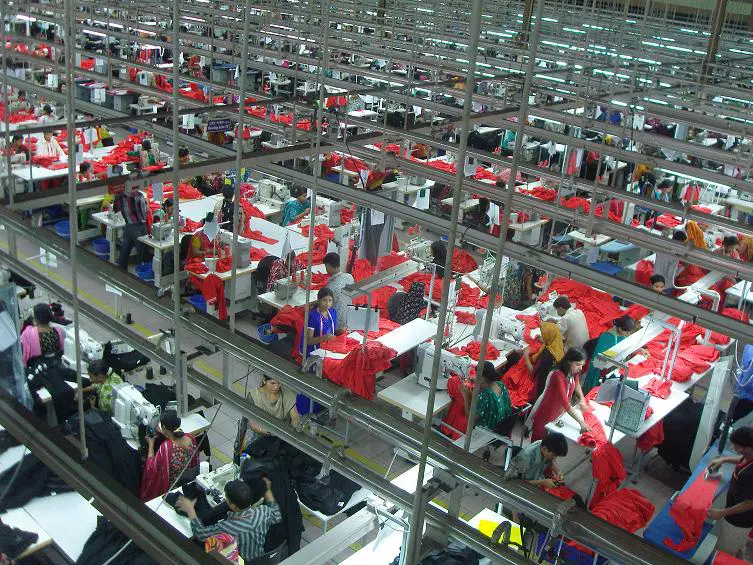
Garment factory production line in Bangladesh — economic development through manufacturing
For developing countries, manufacturing for export is a proven path to development. It creates jobs, brings in foreign currency, and builds industrial capacity. Countries like Bangladesh, Vietnam, and Ethiopia have used garment manufacturing to lift millions of people out of poverty.
But introducing strict labour standards and ESG requirements increases production costs. It makes these countries less competitive. Some industries have already started moving to countries with weaker regulation.
Developing countries argue they have a right to develop at their own pace. They point out that today's developed countries also had terrible working conditions during their industrial revolutions.
Developed countries and international organizations push for higher standards now. They argue that the evidence of harm is overwhelming and that workers are suffering today — we cannot justify more delay in the name of development.
"Labour is constrained within global value chains by unequal power relations. Workers do not have a real choice between a bad job and no job at all."
— Coe & Jordhus-Lier (2023)
This tension is real and complex. There are no easy answers. Good-faith arguments exist on both sides, and wise delegates will respect that complexity rather than retreating into simplistic positions.
Bloc Analysis · Committee Preparation
Bloc Positions in the GVC Debate
A country's position in global value chains shapes its policy preferences in fundamental ways. We can identify four main blocs in the GVC debate, each with its own priorities, constraints, and arguments.
| Bloc |
Members |
Core Position |
Key Priorities |
| A: Developed Consumer Economies |
US, EU, UK, Japan |
Emphasize labour standards, ESG requirements, and supply chain transparency |
Due diligence laws, corporate accountability, human rights compliance |
| B: Export-Oriented Manufacturing Economies |
China, Vietnam, Bangladesh, Mexico |
Cautious about rapid regulation; emphasize development rights and fair participation |
Competitive neutrality, gradual implementation, voice in rule-making |
| C: Resource Exporting Economies |
Saudi Arabia, Nigeria, Chile, Indonesia |
Advocate for fairer value distribution and technology transfer |
Value addition at home, fair terms of trade, moving up the chain |
| D: Governance Reform Advocates |
ILO, OECD, parts of the UN system |
Push for binding international standards and institutional reform |
Enforceable frameworks, worker representation, global cooperation |
Bloc Tensions
Bloc A captures most of the value while pushing compliance costs onto developing countries — critics call this green protectionism or even neo-colonialism through regulation. Bloc B wants a seat at the table when rules are written, not just to receive them. Bloc C sits at the lower end of value chains and wants to move up. Bloc D tries to bridge these divides but often lacks enforcement power.
Understanding these positions is essential for effective committee negotiation. Delegates must know where they stand and where their allies and opponents diverge.
Summary · Four Core Insights
Key Takeaways
There are four key takeaways from today's lecture that you should carry with you into committee.
Systemic
Exploitation in GVCs is not accidental — it is rooted in purchasing practices that drive the entire system
Insufficient
Current governance tools have achieved progress but do not address root causes — they treat symptoms
Complex
The tension between development rights and labour standards is real — good-faith arguments exist on both sides
Positional
Where you sit in the global economy largely determines where you stand on these issues
Labour exploitation in global value chains is systemic. It is not accidental, and it is not just a few bad actors. It is rooted in the purchasing practices that drive the entire system from top to bottom.
Current governance mechanisms have achieved real progress — they have raised awareness and set minimum standards that did not exist before. But they are not sufficient on their own. They do not address the root causes of exploitation.
The tension between development rights and labour standards is real and complex. There are no easy answers, and wise delegates will respect that complexity.
And finally, a country's position in global value chains shapes its policy preferences in fundamental ways. These are the core questions that ECOSOC delegates must grapple with.
Reflection · Committee Preparation
Guiding Questions
Before we finish, here are four questions to think about as you prepare for committee and during the conference itself.
Question 1
Should multinational corporations bear greater responsibility for labour conditions in their supply chains? If so, what specific accountability mechanisms would make that responsibility real and enforceable?
Question 2
How effective are current governance mechanisms like codes of conduct and social audits? What specific changes would make them work better for the workers they are supposed to protect?
Question 3
How can international cooperation help reduce the unequal concentration of profits and power in global value chains? What concrete role can the United Nations and its agencies play?
Question 4
In the context of supply chain disruptions and rising geopolitical tensions, how can countries build more resilient and sustainable global value chains that work for everyone — not just for the powerful?
—— End of Lecture 2 ——
See you in committee.