Lecture 1 · ECOSOC Representative Training · ~25 min
Understanding Global Value Chains and Inequality
CCMUN 2026 — ECOSOC Representative Training · Lecture 1 of 2
Learning Objectives
- Define Global Value Chains and distinguish them from regular supply chains
- Understand the difference between producer-driven and buyer-driven GVCs
- Analyze the unequal distribution of value along the value chain
- Examine how production risks are transferred to workers in developing countries
Lecture 1 · Defining GVCs
What Are Global Value Chains?
A Global Value Chain (GVC) describes the full range of activities — from design, raw material sourcing, and production, to marketing and after-sales service — that firms and workers perform to bring a product or service from conception to end use, across multiple countries.
Unlike a simple supply chain, which tracks the physical flow of goods, a GVC focuses on value creation and power relations. It asks: who captures the value at each stage, and who bears the risks?

A simplified global value chain: value is added at each stage across borders
The concept was developed by scholars such as Gary Gereffi and the UNIDO in the 1990s and 2000s. It shifted the analytical lens from trade in finished goods to trade in tasks — the idea that different stages of production can be fragmented and distributed globally.
Key distinction: A supply chain shows how goods move. A value chain shows who profits and who decides.
"Global value chains have fundamentally reorganized production, shifting economic power toward lead firms while dispersing risk downward."
— Gary Gereffi, Duke University
Lecture 1 · GVC Typology
Producer-Driven vs Buyer-Driven GVCs
Gary Gereffi identified two fundamental types of global value chains, distinguished by who controls the chain and captures the majority of value.
Producer-driven GVCs are led by large manufacturers who control production systems, technology, and capital-intensive processes. Think automobile, aircraft, and semiconductor industries. The lead firm sets specifications, invests heavily in R&D, and coordinates suppliers.
Buyer-driven GVCs are led by retailers, brand owners, and trading companies that control design, branding, and marketing — but outsource manufacturing entirely. The garment, footwear, and electronics assembly sectors exemplify this model.
In buyer-driven chains, the smile curve reveals the pattern: high-value activities (design, branding, retail) sit at the ends, while manufacturing and assembly in the middle capture the least value.
| Feature |
Producer-Driven |
Buyer-Driven |
| Lead Firm |
Large manufacturer (e.g., Toyota, Boeing) |
Retailer or brand owner (e.g., Nike, Walmart) |
| Key Asset |
Production technology, capital |
Brand, design, market access |
| Barriers to Entry |
High (capital, technology) |
Low for manufacturing, high for branding |
| Value Capture |
Concentrated at production stage |
Concentrated at design and retail ends |
| Labor Conditions |
Often better (unionized factories) |
Often worse (outsourced, fragmented) |
Lecture 1 · Value Capture
Unequal Value Distribution
In buyer-driven GVCs, value is captured disproportionately by lead firms in developed countries, while developing-country producers and workers are squeezed into low-value segments.
This creates a developmental lock-in: countries that enter GVCs at the bottom find it extremely difficult to move up the value chain. They become trapped in low-wage, low-skill production with thin profit margins.
The competition among suppliers in developing countries produces a race to the bottom — firms cut wages, avoid safety investments, and tolerate longer hours to win contracts from buyers who can always shift to cheaper alternatives.
Why does this happen? Lead firms hold the power because they control access to consumers. Without that access, suppliers have no leverage — they compete against thousands of other factories willing to accept lower prices.
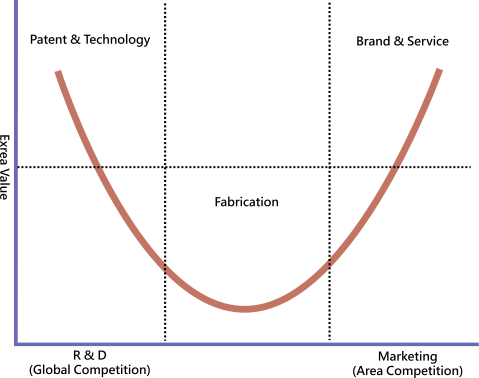
Value concentration: lead firms capture the majority while suppliers compete for shrinking margins
Design & Branding
40-50%
of total value captured by lead firms in developed countries
Retail & Marketing
25-35%
captured by distributors and retailers in consumer markets
Manufacturing
5-10%
remaining share for factories, workers, and local suppliers
Lecture 1 · Risk Cascading
The Risk Transfer Problem
One of the most consequential dynamics in buyer-driven GVCs is the systematic transfer of risk from lead firms to suppliers, and ultimately to workers.
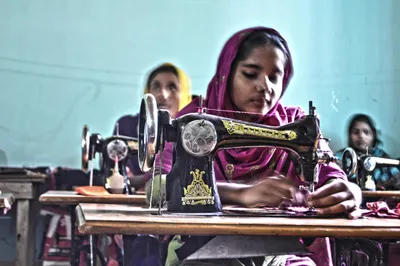
Workers at the bottom of the value chain bear the greatest production risks
Price squeeze: Lead firms demand ever-lower prices from suppliers. As raw material costs rise, suppliers absorb the difference by cutting labor costs — fewer workers, longer hours, deferred maintenance.
Sourcing squeeze: Buyers switch suppliers frequently to find the lowest price, creating insecurity. Factories cannot invest in safety or efficiency when contracts can vanish overnight.
Risk cascade: When market conditions shift — demand drops, material costs spike, or regulations tighten — the consequences flow downward. Lead firms cancel orders. Suppliers lay off workers. Workers lose income with no safety net.
The mechanism: Risk flows downhill because power is concentrated at the top. Lead firms with market access can shift production; workers with no savings cannot shift livelihoods.
Lecture 1 · Case Study
Case Study — The Rana Plaza Disaster
On April 24, 2013, an eight-story commercial building called Rana Plaza collapsed in Savar, Dhaka, Bangladesh. It was one of the deadliest industrial disasters in history.
The building housed five garment factories producing clothing for major global brands. Despite visible cracks appearing the day before, workers were ordered to return. 1,134 people died and over 2,500 were injured.
Rana Plaza exposed the full chain of risk transfer: global brands demanded low prices; factory owners cut corners on building standards; workers had no power to refuse unsafe conditions.
The disaster became a catalyst for the Bangladesh Accord on Fire and Building Safety, a binding agreement between brands and trade unions — one of the few examples of enforced accountability in GVCs.
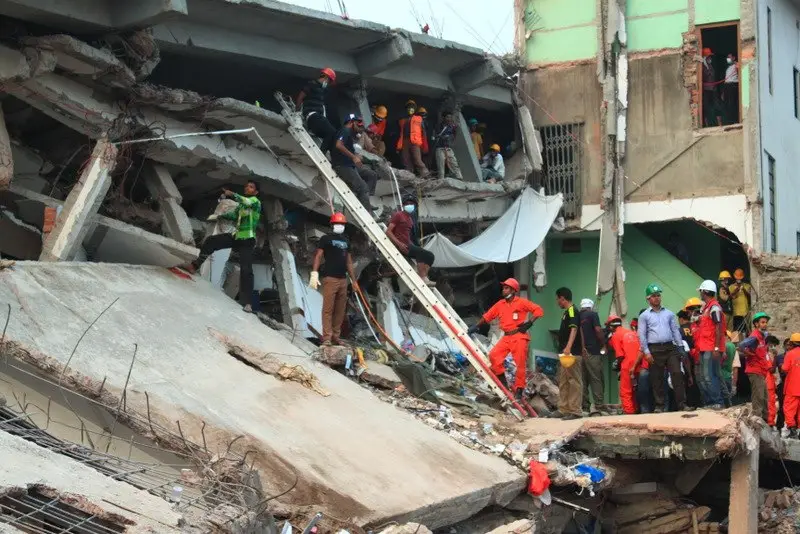
Rana Plaza collapse, Savar, Bangladesh — April 2013
Deaths
1,134
killed in the building collapse
Injuries
2,500+
workers injured in the disaster
Factories
5
garment factories operating in one building
Brands Involved
29+
global brands sourcing from Rana Plaza
Lecture 1 · Reflection
Reflection Questions
- If the Rana Plaza disaster happened today, which specific ECOSOC mechanisms or UN agencies could intervene — and what would prevent them from being ignored by powerful brands?
- Consider a product you use daily — a phone, a shirt, or a pair of shoes. Map its value chain: which countries produce the raw materials, which assemble it, and where is the brand headquartered? Who captures the most value?
- The Bangladesh Accord is one of the few binding agreements in GVCs. Why are such agreements rare? What structural factors — legal, economic, political — make it difficult to enforce accountability across borders?
—— End of Lecture 1 ——
Lecture 2: "ECOSOC Mandates and the Governance of Global Value Chains"